
Every booking that comes through an OTA costs your hotel between 15% and 25% of the room rate. On a property running 100 rooms at a $150 average daily rate with 55% of reservations flowing through Booking.com and Expedia, that adds up to roughly $450,000 a year in commission (RevPARGenius, 2026). Hotel direct bookings cost approximately 4.5% all-in, covering payment processing and your booking engine. The difference between those two numbers is margin your hotel is giving away.
OTAs are not the enemy. They still drive roughly 63% of independent hotel reservations and they provide discovery reach that no single property can replicate alone. But the question is not whether to work with OTAs. It is how much of your booking mix should depend on them, and what you are doing to shift your highest-value guests toward direct. Building a credible hotel SEO strategy is the most cost-effective way to make that shift, because organic search captures travellers at the moment they are actively looking for what you sell.
Hotel Direct Bookings: What OTAs Cost You Beyond Commission
Hotels can reduce OTA commission costs by growing direct bookings through SEO. That means a fast, mobile-friendly website, a fully optimised Google Business Profile, location and experience pages that match what travellers search for, hotel schema, Google Hotels free booking links and clear reasons to book direct, such as a best-rate guarantee or free breakfast. OTAs still matter for discovery, but every guest you shift to direct keeps more revenue in your hotel.
Every booking that comes through an online travel agency (OTA) costs your hotel a commission, often between 15% and 25% of the room rate. A direct booking through your own website typically costs far less, often around 4% to 5% once you include payment processing and booking engine fees. The difference between those two numbers is margin your hotel is giving away.
Here’s what that looks like for a typical Indian boutique hotel:
| Assumption | Value |
|---|---|
| Rooms | 40 |
| Average daily rate | ₹8,000 |
| Average occupancy | 65% |
| Share of bookings through OTAs | 60% |
| Average OTA commission | 18% |
| Annual room revenue | About ₹7.6 crore |
| Annual OTA commission | About ₹82 lakh |
If this hotel shifts just 10% of its total bookings from OTAs to direct, it saves roughly ₹10 lakh a year in commission, every year, without selling a single extra room.
OTAs aren’t the enemy. They provide reach that no single property can match alone. The real question is how much of your booking mix should depend on them, and what you’re doing to bring your highest-value guests direct. A strong hotel SEO strategy is one of the most cost-effective ways to make that shift, because organic search reaches travellers at the exact moment they’re looking for what you offer.
What OTAs Really Cost You Beyond Commission
The commission rate is only the start.
Guest data: a booking through an OTA often comes with limited guest information. The OTA owns the customer relationship, so it’s harder to send pre-arrival emails, invite guests into a loyalty programme or win them back with a personalised offer.
Brand recall: guests often remember the platform they booked through, not your hotel. Next time, they go back to the app, not your website.
Rate and room restrictions: some OTA contracts have included rate parity or room parity clauses that limit how you price and sell on your own website. In India, the Competition Commission of India ordered MakeMyTrip-Goibibo and OYO in 2022 to remove price and room parity obligations from their hotel agreements, and parity clauses have also been restricted in Europe. Review your current contracts carefully, ideally with legal advice, to understand exactly what you can offer direct.
The billboard effect: there’s good news too. Research from Cornell University’s School of Hotel Administration found that being listed on an OTA increases visits to a hotel’s own website, a pattern known as the billboard effect. Many travellers discover a hotel on an OTA, then visit its website before booking. That visit is your conversion window. If your site is fast, gives a clear reason to book direct and makes booking easy, you can win a share of those guests without extra ad spend.
| Factor | OTA booking | Direct booking |
|---|---|---|
| Cost per booking | Often 15% to 25% commission | Often around 4% to 5% all-in |
| Guest data | Limited, owned by the OTA | Full, owned by your hotel |
| Brand recall | Guest remembers the platform | Guest remembers your hotel |
| Remarketing | Very limited | Email, WhatsApp, loyalty and retargeting |
| Pricing control | May be restricted by contract | Full flexibility |
| Long-term value | Transactional | Repeat bookings, referrals and reviews |
Why SEO Is the Most Cost-Effective Path to Direct Bookings
SEO for hotels works because it captures demand at the moment of highest intent. A traveller searching “heritage haveli stay in Jaipur with pool” or “eco resort near Coorg for couples” isn’t casually browsing. They’re planning a trip and looking for a property that fits. Ranking for those searches puts your hotel in front of them before they open an OTA app.
The economics differ from paid advertising. Search ads charge you for every click, and costs rise with competition. SEO needs upfront investment in content, technical performance and authority, but the traffic it earns doesn’t carry a per-click cost. Over 12 to 18 months, the cost per booking from organic search typically falls well below both OTA commissions and paid ads.
A hotel SEO agency building a programme around direct bookings isn’t adding a cost centre. It’s building an asset that reduces your distribution costs year after year.
5 Steps to a Hotel SEO Strategy That Drives Direct Bookings
1. Get the Technical Foundations Right
A hotel website that passes Core Web Vitals (LCP under 2.5 seconds, INP under 200 milliseconds and CLS under 0.1) and works flawlessly on mobile is the baseline. Google uses the mobile version of your site for ranking, and most travellers research on their phones. If your booking engine is clunky on mobile, you lose both rankings and bookings.
- Use HTTPS across the whole site
- Submit a clean XML sitemap in Google Search Console
- Make sure every room, package and experience page is crawlable and indexed
- Set up cross-domain tracking in GA4 if your booking engine runs on a separate domain, so you can see which pages drive bookings
2. Win Local Search and Google Hotels
For hotels, local SEO isn’t optional.
Google Business Profile: this is your most important asset for appearing in Google Maps and local results. Keep your name, address and phone number accurate and consistent everywhere, upload high-quality photos regularly, list your amenities and respond to every review promptly and personally.
Google Hotels free booking links: Google shows free booking links for hotels in its hotel search results. Connecting your booking engine through a Google-approved connectivity partner lets your own website appear alongside OTAs, often at no cost per click. Ask your booking engine provider whether they support it.
Location and experience pages: build pages for the specific searches your guests make, such as “plantation stay in Wayanad,” “heritage wedding venue in Shekhawati” or “boutique hotel near Amer Fort.” Each page should target one long-tail query, use original photography and include a clear “Book Direct” button.
3. Create Content That Captures Search Demand
The best hotel content answers questions travellers ask before they book: “best time to visit Sikkim,” “things to do around Mussoorie in the monsoon” or “Coorg vs Wayanad for a weekend trip.” People searching these are already planning a trip to your destination.
Every content piece should link to a relevant room page, experience page or your booking engine. A blog post that attracts traffic without a booking path is a missed opportunity.
Structure content with clear headings and direct answers, so it can also appear in Google’s AI Overviews and in AI tools such as ChatGPT, which more travellers now use to plan trips and shortlist hotels.
4. Add Schema Markup for Hotels
Hotel, LocalBusiness and FAQ schema give search engines explicit details about your property, such as location, amenities, price range and reviews. Correct markup can make your pages eligible for rich results that improve click-through rates, and it helps search engines and AI tools understand exactly what your hotel offers.
5. Turn Website Visitors Into Direct Bookers
Traffic without conversion is only half a strategy. Give visitors a clear, immediate reason to book direct:
- A best-rate guarantee
- Direct-booking perks, such as free breakfast, a room upgrade or late checkout
- Honest urgency, such as “2 rooms left for Diwali weekend”
- Flexible cancellation for direct guests
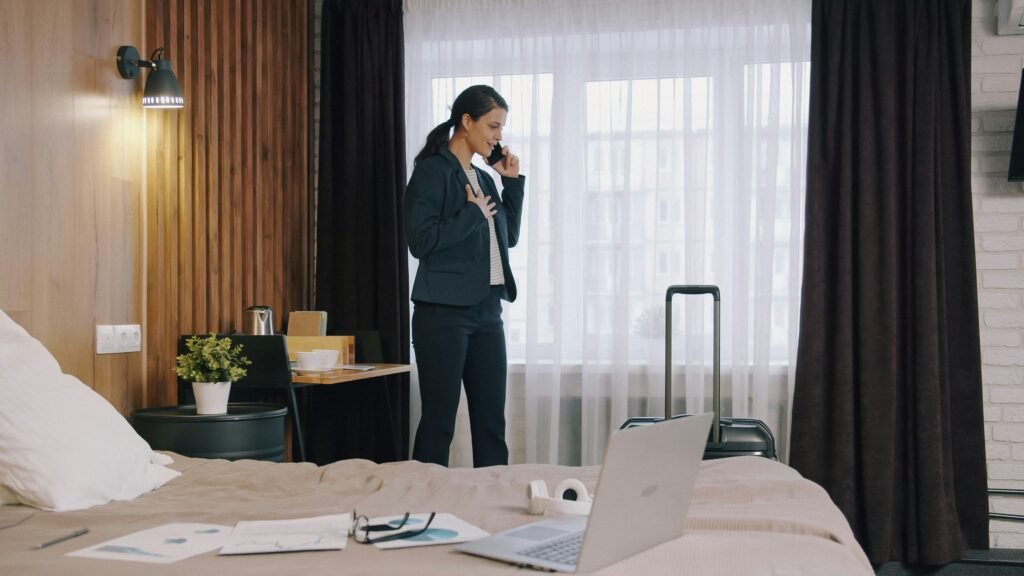
Make booking effortless. Keep the booking process to three steps or fewer and make sure it works smoothly on mobile. Many guests in India also prefer to ask questions before booking, so offer WhatsApp chat and quick phone support, which works especially well for boutique and heritage properties.
The Right Way to Use OTAs Alongside SEO
Dropping OTAs entirely is rarely the right move. They bring reach, especially for international travellers and last-minute bookings, that most independent hotels can’t generate alone. The goal of a hotel SEO strategy isn’t to eliminate OTAs but to shift the booking mix so your most valuable, repeat guests come direct.
- Use OTAs for discovery and first-time guests
- Capture guest details during the stay, with permission, for future communication
- Bring guests back direct with email, WhatsApp and loyalty offers for their next visit
- Use SEO and Google Hotels to compete for travellers before they reach an OTA
Over time, your direct share grows, commission costs fall and each guest’s lifetime value increases. That’s the compounding effect of investing in organic visibility.
How to Measure Your Progress
Track these numbers every month:
Repeat guest rate: how many guests return and book direct
Direct booking share: the percentage of total bookings made direct
Commission spend: total OTA commissions paid
Organic traffic and bookings: sessions and bookings from organic search in GA4
Cost per acquisition by channel: how much each booking costs from OTAs, ads and organic search
Google Business Profile insights: calls, direction requests and website clicks
Frequently Asked Questions
What are hotel direct bookings and why do they matter?
Hotel direct bookings are reservations made through a hotel’s own website, phone, WhatsApp or front desk, rather than through OTAs such as MakeMyTrip, Booking.com or Agoda. They matter because they usually cost far less than OTA commissions and give the hotel full ownership of the guest relationship, which drives repeat stays.
How much commission do OTAs charge hotels in India?
OTA commissions commonly range from around 15% to 25% of the booking value, depending on the platform, contract and any visibility or promotional programmes. On an ₹8,000 room night, that’s roughly ₹1,200 to ₹2,000 per night, compared with around ₹360 to ₹400 for a direct booking.
How does SEO for hotels reduce OTA dependency?
SEO for hotels helps your website appear when travellers search for stays in your location or for the experiences you offer. When those travellers land on a fast, well-designed website with clear direct-booking benefits, more of them book with you instead of through an OTA, reducing your commission costs over time.
How long does a hotel SEO strategy take to produce results?
Most hotel SEO strategy programmes produce measurable ranking improvements within three to six months, with significant direct booking impact visible within six to twelve months. Technical fixes and local SEO improvements tend to show results faster than content-driven authority building, which compounds over time. The long-term return is substantially higher than paid channels because organic traffic does not carry a per-click cost.
Can hotels offer lower rates than OTAs?
It depends on your contracts. In India, the Competition Commission of India ordered major platforms in 2022 to remove price and room parity obligations from hotel agreements. Many hotels now offer direct-booking perks or member rates. Always check your current OTA contracts before changing your pricing strategy.
What does a hotel SEO agency actually do?
A hotel SEO agency improves site speed and mobile performance, optimises your Google Business Profile, creates location and experience pages, writes destination content, implements hotel schema, earns links from travel publications and tracks how organic traffic turns into direct bookings.
How long does a hotel SEO strategy take to produce results?
Technical fixes and Google Business Profile improvements can show results within weeks. Measurable ranking gains usually appear within three to six months, with a meaningful rise in direct bookings within six to twelve months as content and authority build.
Should hotels stop using OTAs entirely?
No. OTAs provide valuable discovery, especially for international and last-minute travellers. The smarter approach is to use OTAs for first-time guests and bring those guests back direct through your website, email, WhatsApp and loyalty offers.
How do I choose the best SEO company in Mumbai for my hotel?
Look for an agency with real hospitality case studies, experience with booking engines and Google Hotels, strong local SEO skills and reporting that tracks direct bookings and revenue, not just rankings. The best SEO company in Mumbai for hotels will understand both search and how travellers decide where to stay.
Shift Your Booking Mix Towards Direct
City & Talent is a full-service digital marketing agency with offices in Mumbai, Delhi and Dubai, with deep experience helping hotels, heritage properties and travel brands grow. We build hotel SEO programmes that increase direct bookings and reduce what you pay in OTA commissions.
If you’re looking for the best SEO company in Mumbai to grow your hotel’s direct bookings, get in touch with our team.