
Google’s Search Generative Experience or SGE optimisation represents a paradigm shift in how users interact with search results. This revolutionary feature harnesses the power of artificial intelligence to provide comprehensive, contextual responses directly within the search interface, fundamentally changing the landscape of digital marketing and search engine optimisation.
As SGE continues its global rollout, businesses must adapt their strategies to maintain visibility in this AI-driven search environment. The traditional approach of ranking individual web pages is evolving into a more complex ecosystem where AI-generated content synthesises information from multiple sources to deliver enriched user experiences.
Understanding how to optimise for Search Generative Experience isn’t merely about staying current with Google’s latest features—it’s about future-proofing your digital presence in an increasingly sophisticated search landscape. This comprehensive guide examines the key strategies required to succeed in the era of generative AI search.
Understanding Google’s Search Generative Experience
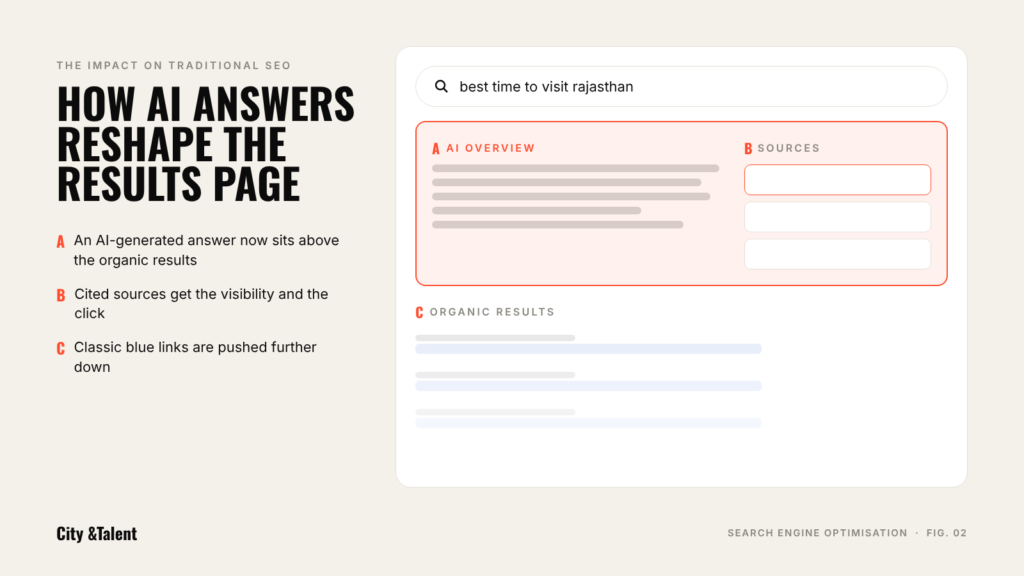
Search Generative Experience fundamentally transforms how Google presents search results by utilising large language models to generate comprehensive responses above traditional organic results. This AI-powered search feature creates dynamic, contextual answers that synthesise information from multiple sources whilst maintaining source attribution.
The SGE interface appears as an expandable, AI-generated response at the top of search results, providing users with immediate answers while offering pathways to explore more in-depth content. This feature represents Google’s commitment to enhancing the user experience by minimising the friction between queries and answers.
Generative AI technology powering SGE analyses vast amounts of web content to create cohesive, informative responses that address user intent more comprehensively than traditional search results. This capability marks a significant evolution in search algorithms and requires new approaches to content optimisation.
The implications for website traffic and click-through rates are substantial, as users may find their answers directly within the SGE response without needing to visit individual websites. However, this challenge also presents opportunities for brands that successfully optimise their content for inclusion in these AI-generated summaries.
The Impact of SGE on Traditional SEO
Search Generative Experience doesn’t replace traditional SEO strategies but rather adds new layers of complexity to search engine optimisation. Websites must now consider how their content contributes to AI-generated responses while maintaining focus on traditional ranking factors.
SERP features continue to evolve with the implementation of SGE, creating a more dynamic search landscape where content visibility depends on multiple factors beyond traditional ranking signals.
The integration of machine learning into search results means that optimisation strategies must account for how AI systems interpret and synthesise content.
Search behaviour is shifting as users become accustomed to receiving comprehensive answers directly from search results. This change impacts organic search traffic patterns and necessitates a reassessment of marketers’ content strategy and keyword targeting approaches.
The relationship between featured snippets and SGE responses creates new opportunities for content creators who understand how to structure information for AI consumption. These SERP changes represent both challenges and opportunities for maintaining search visibility.
Essential SGE Optimisation Strategies
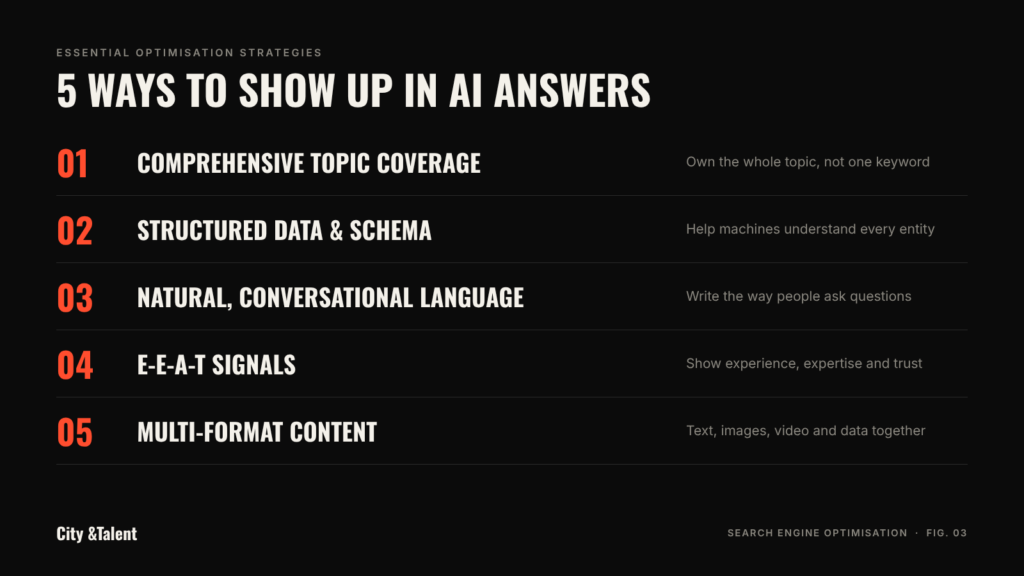
1. Comprehensive Topic Coverage and Authority
Content depth remains crucial for SGE’s success, but the focus shifts towards creating authoritative resources that AI systems can confidently cite. Comprehensive content that thoroughly addresses user queries increases the likelihood of inclusion in AI-generated responses.
Develop topic clusters that cover subjects exhaustively, addressing related questions and subtopics within your area of expertise. This approach helps establish topical authority that AI systems recognise when generating responses about your subject matter.
Content quality must prioritise accuracy, clarity, and usefulness above all else. SGE optimisation requires content that AI systems can trust and that users can rely upon for accurate information.
2. Structured Data and Schema Implementation
Schema markup serves as a critical communication tool for Google’s AI systems, providing explicit context about the purpose and structure of your content. Implementing comprehensive, structured data enhances your content’s machine readability and increases its potential for SGE inclusion.
Rich snippets created through proper schema implementation help AI systems understand the context and relationships within your content. This technical foundation supports SGE visibility by making your content more accessible to AI interpretation.Focus on implementing FAQ schema, How-to schema, Article schema, and other relevant markup types that align with your content strategy. Technical SEO excellence provides the foundation for successful SGE optimisation.
3. Natural Language and Conversational Content
Conversational content aligns with how users interact with generative AI systems and how these systems prefer to present information. Structure your writing to sound natural when read aloud or presented in AI-generated responses.
Long-tail keywords and natural language patterns help your content match the conversational queries that users submit to AI-powered search systems. This approach improves your chances of being cited in SGE responses.
Question-based content that directly addresses user queries provides clear value to both AI systems and human readers. This format aligns well with how SGE presents information to users.
4. E-E-A-T Optimisation for AI Trust
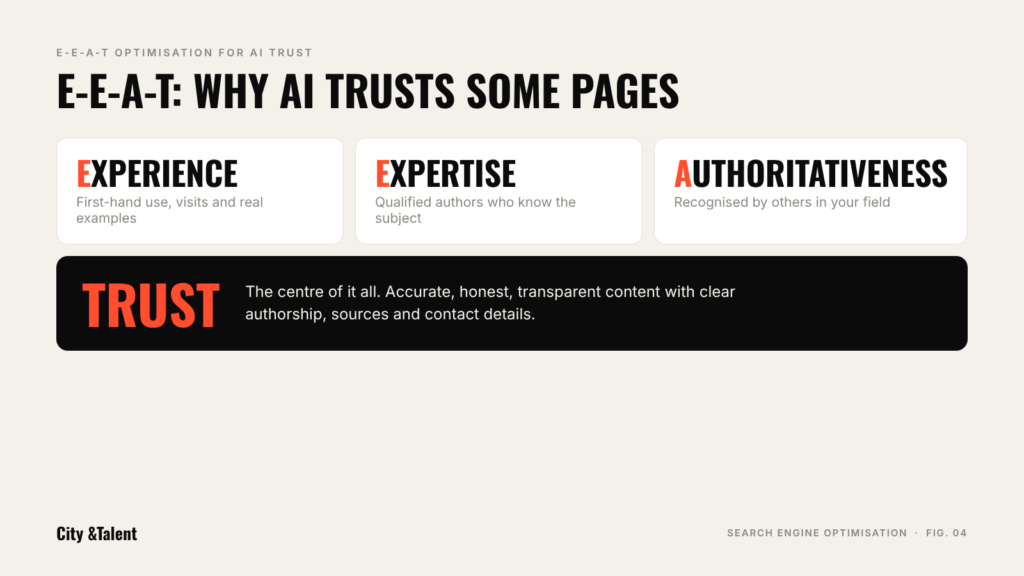
Experience, Expertise, Authoritativeness, and Trustworthiness become even more critical in the SGE era, as AI systems must evaluate source credibility when synthesising information from multiple sources.
Author credentials and clear expertise signals help AI systems assess the reliability of your content. Include comprehensive author biographies, relevant qualifications, and evidence of subject matter expertise.
Trust signals such as accurate citations, up-to-date information, and transparent sourcing contribute to how AI systems evaluate content reliability. These factors influence inclusion in Search Generative Experience responses.
5. Multi-Format Content Strategy
Content formats that work well for SGE include comprehensive guides, step-by-step tutorials, comparison articles, and frequently asked questions (FAQ) sections. These formats provide structured information that AI systems can easily parse and present.
Visual content optimisation remains important as SGE responses often include images and multimedia elements. Ensure your visual content includes proper alt text, captions, and contextual information.
Video content and podcast optimisation should include transcripts and structured descriptions that help AI systems understand and potentially reference your multimedia content.
Advanced SGE Optimisation Techniques
Local SEO for Search Generative Experience
Local search optimisation requires specific attention within the SGE framework, as AI-generated responses increasingly include location-specific information and recommendations.
Google Business Profile optimisation becomes even more critical as SGE draws from local business information to provide comprehensive local search responses. Ensure your business information is accurate, complete, and regularly updated.
Local content creation should address community-specific queries and provide valuable local insights that AI systems can incorporate into geographically relevant responses.
Mobile and Voice Search Considerations
Mobile optimisation for SGE requires consideration of how AI-generated responses appear and function on mobile devices. Ensure your content remains accessible and valuable across all device types and platforms.
Voice search optimisation aligns closely with SGE optimisation, as both systems process natural language queries and provide conversational responses. Structure your content to address voice search patterns and query types.
Content Freshness and Updates
Content freshness signals to AI systems that your information remains current and relevant. Regularly update your content to maintain its value for inclusion in Search Generative Experience.
News and trending topics require special attention as SGE often incorporates current events and trending information into its responses. Stay current with industry developments and update your content accordingly.
Measuring SGE Performance and Success
Key Performance Indicators
Traditional SEO metrics must be supplemented with SGE-specific performance indicators to understand your success in this new search landscape.
SGE visibility tracking requires monitoring how often your content appears in or contributes to AI-generated responses. This metric provides insight into the value of your content to AI systems.
Click-through rate analysis from SGE responses helps you understand user behaviour and the effectiveness of your content in driving traffic despite the AI-generated summaries.
Monitoring Tools and Techniques
Search Console data provides some insights into SGE performance, though dedicated SGE monitoring tools are still emerging. Utilise available analytics to track your performance trends.
Content performance analysis should include an assessment of which content types and topics perform best in SGE responses, informing your future content strategy.
Future-Proofing Your SGE Strategy
Emerging Trends and Technologies
The evolution of AI technology continues rapidly, requiring adaptive strategies that can evolve in tandem with changing capabilities and user expectations.
Multimodal search capabilities are expanding, incorporating images, videos, and other media types into search experiences. Prepare your content strategy to accommodate these emerging capabilities.
Personalisation in AI-generated responses is likely to increase, requiring content that can effectively serve diverse user needs and contexts.
Staying Ahead of Algorithm Changes
Algorithm updates affecting SGE will continue as Google refines its AI systems. Stay informed about changes and adapt your strategies accordingly.
Industry best practices for SGE optimisation will evolve as more data becomes available about what works most effectively. Remain flexible and willing to adjust your approach as new insights emerge.
Common SGE Optimisation Mistakes to Avoid
Over-Optimisation Pitfalls
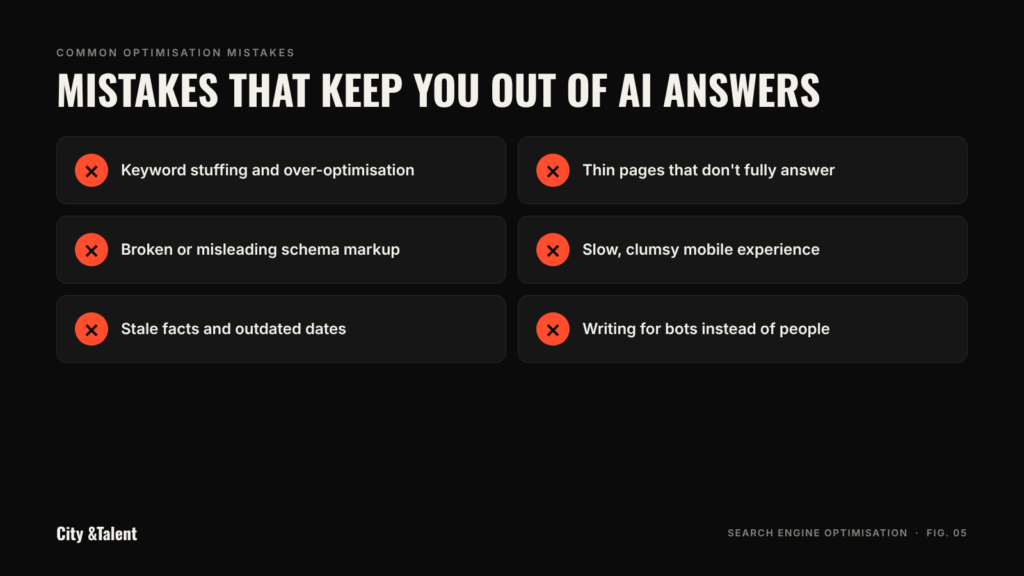
Keyword stuffing and other manipulative techniques are particularly problematic for SGE, as AI systems can detect and penalise artificial optimisation attempts.
Content duplication across multiple pages can confuse AI systems and reduce your chances of being featured in SGE responses. Focus on creating unique, valuable content for each page.
Technical Implementation Errors
Schema markup errors can prevent AI systems from correctly understanding your content. Regularly audit and test your structured data implementation.
Site speed and technical performance remain crucial, as slow-loading content is less likely to be included in SGE responses that prioritise user experience.
Conclusion: Embracing the SGE Revolution
The Search Generative Experience represents the future of search, presenting both challenges and opportunities for businesses willing to adapt their strategies. Success in this new landscape requires a comprehensive approach that combines traditional SEO excellence with AI-focused optimisation techniques.
The businesses that thrive in the SGE era will be those that prioritise content quality, user experience, and technical excellence whilst remaining adaptable to the rapidly evolving search landscape. SGE optimisation isn’t just about visibility—it’s about providing genuine value in an AI-enhanced search environment.
As Search Generative Experience continues to evolve and expand globally, the importance of proper optimisation will only increase. The strategies outlined in this guide provide a foundation for success; however, ongoing adaptation and refinement will be essential for maintaining a competitive advantage.
City & Talent specialises in helping businesses navigate these complex digital transformations and optimise their presence for emerging search technologies. Suppose you’re ready to future-proof your digital strategy and maximise your visibility in Google’s Search Generative Experience. In that case, our expert team can develop a customised approach that drives results in this new search landscape.