
The digital landscape is undergoing a revolutionary shift as generative AI engines, such as ChatGPT and Perplexity, are transforming how users search for and consume information. These sophisticated platforms don’t just return a list of links—they synthesise information from multiple sources to provide comprehensive, contextual answers that fundamentally change user search behaviour.
As businesses grapple with this transformation, understanding how to optimise your website for generative engines has become crucial for maintaining online visibility and driving meaningful traffic. The traditional SEO playbook, whilst still relevant, requires significant adaptation to succeed in this new era of AI-powered search.
This comprehensive guide explores the essential strategies needed to optimise your website for ChatGPT and Perplexity, ensuring your content not only reaches these platforms but also becomes a trusted source for AI-generated responses.
Understanding Generative Search Engines
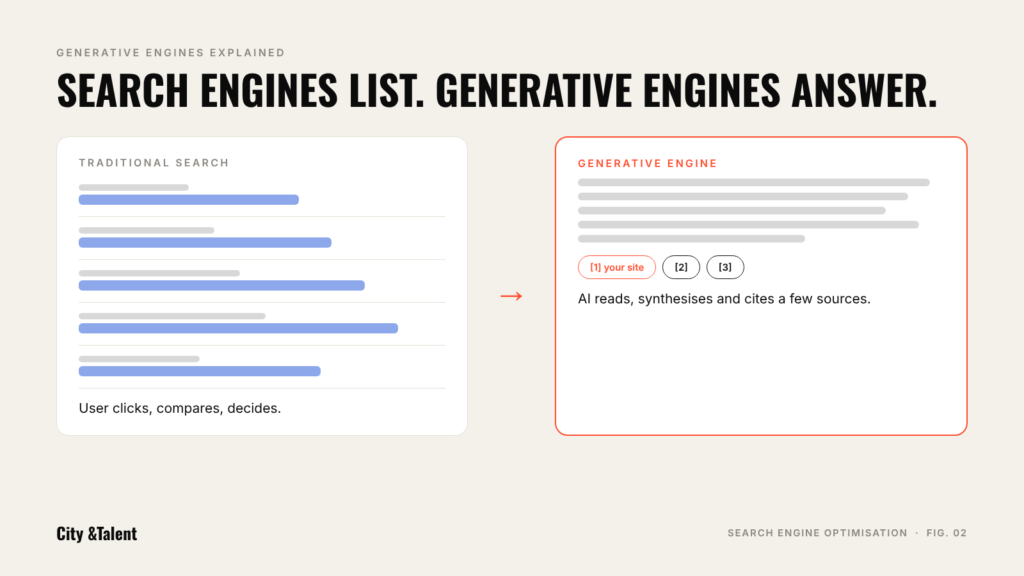
Generative search engines represent a paradigm shift from traditional keyword-based search to contextual understanding and the synthesis of answers. Unlike conventional search engines that rank pages based on authority and relevance signals, these AI-powered platforms analyse content meaning, extract key information, and present cohesive responses that comprehensively address user queries.
ChatGPT’s search capabilities utilise advanced natural language processing to comprehend user intent and deliver conversational responses. When users ask questions, ChatGPT doesn’t simply retrieve pre-existing answers—it synthesises information from its training data and, increasingly, from real-time web searches to create tailored responses.
Perplexity’s approach combines real-time web crawling with AI analysis to provide up-to-date, source-attributed answers. This platform excels at providing current information while maintaining transparency about its sources, making it particularly valuable for users seeking recent developments or factual information.
The impact on website traffic and user engagement is significant. Users who find complete answers within these platforms may never visit your website, making it essential to optimise your website for generative engines to ensure your content contributes to these AI-generated responses while still driving qualified traffic.
Core Principles of Generative Engine Optimisation
Content Structure and Clarity
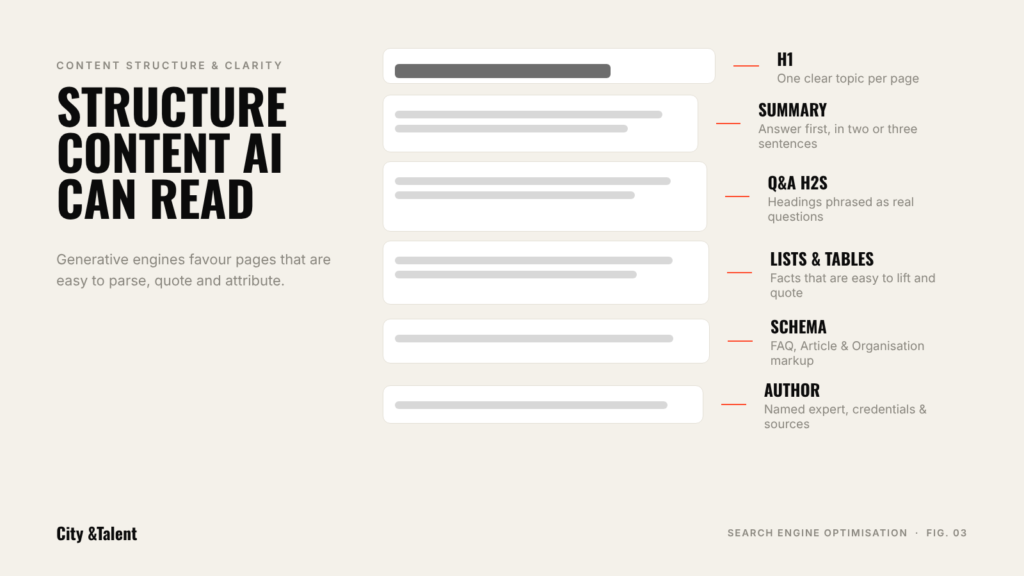
Structured content forms the foundation of successful generative engine optimisation. AI systems excel at processing well-organised information with clear hierarchies, logical flow, and distinct sections that address specific aspects of topics.
Semantic HTML and proper heading structures help generative engines understand your content’s organisation and extract relevant information for synthesis. Use H1, H2, and H3 tags strategically to create a logical content hierarchy that mirrors how users think about your topic.
Depth of content and comprehensive coverage are crucial for the visibility of generative engines. Rather than creating shallow content that touches on multiple topics, focus on providing thorough, authoritative coverage of specific subjects that demonstrates genuine expertise.
Authority and Trustworthiness
Content authenticity becomes paramount when optimising for generative engines, as these platforms prioritise reliable, accurate information for synthesis. Establish clear author credentials, include relevant citations, and maintain factual accuracy throughout your content.
E-A-T principles (Expertise, Authoritativeness, Trustworthiness) apply even more strongly to generative engine optimisation. These AI systems must evaluate source credibility when synthesising information, making it essential to demonstrate genuine expertise and authority in your subject matter.
Source attribution and factual accuracy directly impact how generative engines perceive and utilise your content. Ensure all claims are supported by credible sources and maintain high standards of accuracy throughout your content.
Strategic Approaches to Optimise Your Website for ChatGPT
Content Formatting for AI Comprehension
Conversational content aligns well with ChatGPT’s natural language processing capabilities. Structure your content to address common questions and concerns in a natural, conversational tone that mirrors how users interact with AI assistants.
Question-based content performs exceptionally well for ChatGPT optimisation. Create content that directly addresses user queries using clear, concise language that AI systems can easily understand and synthesise.
Logical flow and contextual connections enable ChatGPT to understand the relationships between concepts within your content, allowing it to comprehend the context effectively. Use transition phrases, connecting sentences, and logical progression to create content that AI can follow and synthesise effectively.
Technical Implementation
Schema markup provides explicit context that helps ChatGPT understand the purpose and structure of your content. Implement comprehensive structured data, including FAQ schema, How-to schema, and Article schema, to improve AI comprehension.
Meta descriptions and title tags communicate the value proposition and primary topics of your content. These elements help AI systems understand what your content covers and when it might be relevant for synthesis.
Internal linking creates topical clusters that help AI systems understand the breadth and depth of your expertise. Link related content strategically to demonstrate comprehensive coverage of your subject areas.
Optimising Your Website for Perplexity
Real-Time Content Optimisation
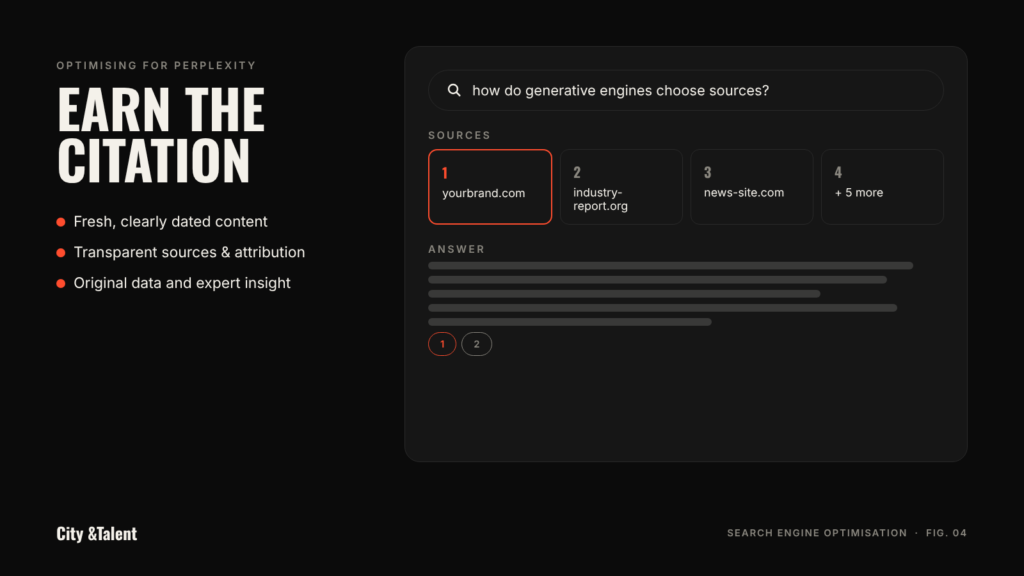
Content freshness is crucial for Perplexity optimisation, as this platform emphasises current information and recent developments. Regularly update your content to maintain its relevance and accuracy.
News and trending topics should be covered promptly and comprehensively. Perplexity often draws from recent content when addressing current events or emerging issues, making timely publication crucial for visibility.
Date stamps and publication dates help Perplexity understand content currency and relevance. Ensure your content includes clear temporal indicators that help AI systems accurately assess the freshness of information.
Source Attribution and Transparency
Citation quality directly impacts Perplexity’s willingness to reference your content. Include high-quality sources, maintain accurate citations, and ensure all factual claims are adequately supported.
Transparency in your content creation process builds trust with both AI systems and users. Identify authors, publication dates, and sources to demonstrate credibility and reliability.
Fact-checking and accuracy verification are essential for Perplexity optimisation. This platform values accurate, well-researched content that can be confidently cited in AI-generated responses.
Advanced Optimisation Techniques
Semantic SEO and Topic Clustering
Topic clustering creates comprehensive resource hubs that demonstrate expertise across related subjects, providing a comprehensive overview of the subject matter. This approach enables generative engines to understand your authority within specific domains, thereby increasing the likelihood of content synthesis.
Semantic relationships between concepts should be established through your content structure and internal linking. Help AI systems understand how different aspects of your topic relate to each other and broader industry themes.Keyword context matters more than keyword density when optimising for generative engines. Focus on natural language usage and comprehensive topic coverage rather than traditional keyword optimisation techniques.
User Intent Alignment
Search intent analysis helps you create content that addresses the underlying needs and questions that drive user queries. Understanding why users search for specific information enables the creation of more effective content for AI synthesis.
Question anticipation involves identifying and addressing related questions that users might have about your topic. This comprehensive approach increases the likelihood that your content will be referenced across multiple query types.
Content gaps in your industry represent opportunities to create valuable resources that generative engines can reference and utilise. Identify topics that are underserved by existing content and ensure comprehensive coverage of these areas.
Technical Considerations and Best Practices
Site Performance and Accessibility
Page speed remains important for generative engine optimisation, as slow-loading content may not be crawled or processed effectively. Maintain fast loading times across all devices and connection types.Mobile optimisation ensures your content remains accessible to AI systems crawling from various sources and devices. Responsive design and mobile-friendly formatting are essential for comprehensive accessibility.
Crawl accessibility helps ensure that generative engines can effectively access and process your content. Remove crawl barriers, optimise your robots.txt file, and ensure proper XML sitemap implementation.
Content Management and Updates
Version control and content maintenance become crucial when optimising for generative engines. These systems may reference older versions of your content, making it essential to maintain accuracy across all published versions.
Content archiving strategies should consider how generative engines might reference historical content. Ensure that archived content remains accessible and accurate, or implement proper redirects to updated versions.
Regular audits of your content help maintain quality and accuracy standards that generative engines expect. Implement systematic review processes to ensure all content meets optimisation requirements.
Measuring Success and Performance
Key Performance Indicators
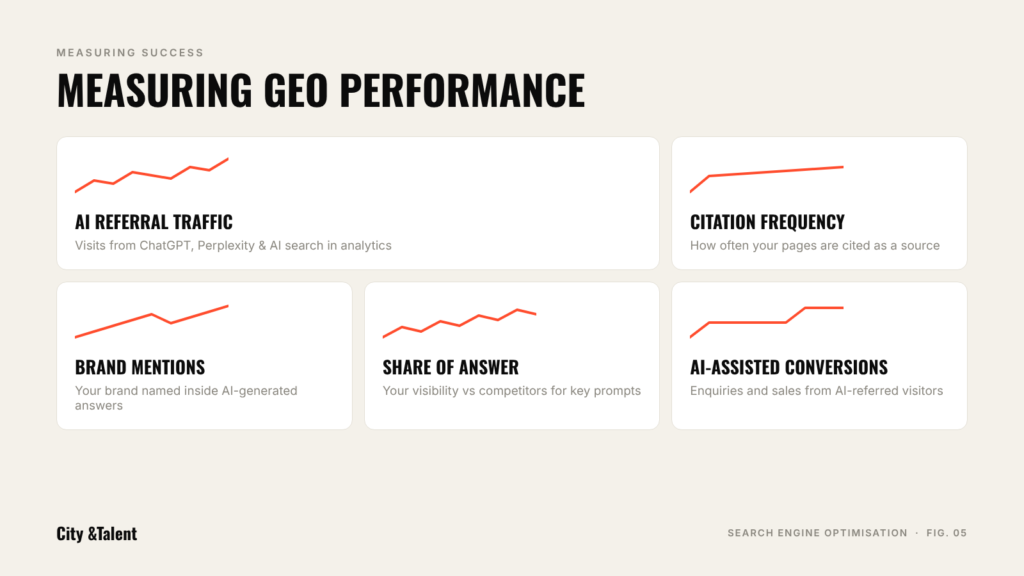
Visibility metrics for generative engine optimisation differ from traditional SEO metrics. Focus on measuring how often your content is referenced or synthesised rather than traditional ranking positions.
Traffic quality from generative engines may differ from traditional search traffic. Users arriving from AI-generated responses often have higher intent and engagement levels, making conversion tracking particularly important.
Content attribution tracking helps you understand which content pieces are most valuable for generating synthetic content. This information guides future content creation and optimisation efforts.
Analytics and Monitoring
Referral traffic from generative engines provides insights into your optimisation effectiveness. Monitor traffic patterns and user behaviour to understand how
AI-generated referrals differ from traditional search traffic.
Content performance analysis should include assessment of which topics and formats perform best for generative engine synthesis. This data informs your content strategy and optimisation priorities.
Competitive analysis in the generative engine space requires understanding which sources AI systems prefer for different types of queries. Monitor how your content performs relative to competitors in AI-generated responses.
Future-Proofing Your Strategy
Emerging Technologies and Trends
Multimodal search capabilities are expanding to include images, audio, and video content. Prepare your content strategy to accommodate these developing search formats and ensure comprehensive media optimisation.
Personalisation in AI-generated responses is likely to increase, requiring content that can effectively serve diverse user needs and contexts. Create flexible content that can address various user scenarios and preferences.
Integration trends between different AI platforms may affect how content is shared and synthesised across systems. Stay informed about platform developments and adjust your optimisation strategies accordingly.
Continuous Adaptation
Algorithm updates affecting generative engines require ongoing strategy refinement. Stay informed about platform changes and adapt your optimisation approach based on evolving requirements.
The evolution of the industry in generative search will create new opportunities and challenges. Maintain flexibility in your approach and be prepared to adapt as the landscape continues to develop.
Conclusion: Mastering Generative Engine Optimisation
Successfully learning how to optimise your website for generative engines requires a fundamental shift in how we approach content creation and SEO. The strategies needed to optimise your website for ChatGPT and optimise your website for Perplexity go beyond traditional SEO techniques to encompass comprehensive topic coverage, content authenticity, and AI-friendly formatting.
The businesses that thrive in this new landscape will be those that embrace these changes while maintaining focus on creating genuine value for users. Generative engine optimisation isn’t about gaming AI systems—it’s about creating content that is so valuable and well-structured that AI systems naturally want to reference and synthesise it.
As generative search continues to evolve, the importance of proper optimisation will only increase. The strategies outlined in this guide provide a solid foundation for success; however, ongoing adaptation and refinement will be crucial for maintaining a competitive edge in this rapidly evolving environment.
At City & Talent, we specialise in helping businesses navigate the complex world of generative engine optimisation. Our expert team understands the nuances of optimising your website for generative engines. It can develop customised strategies that ensure your content thrives in this new AI-powered search landscape, driving both visibility and meaningful business results.